



Blog Overview
Building scalable software systems seems simple: improve the features, and design the architecture. However, many businesses discover that big software initiatives soon become expensive, unpredictable, and difficult to manage.
Industry data shows how common this problem is.
As per Standish Group's CHAOS research, only about 31% of software projects are completed successfully on time, within budget, and with the intended scope. Meanwhile, about 50% exceed budgets or schedules, and 19% are cancelled.
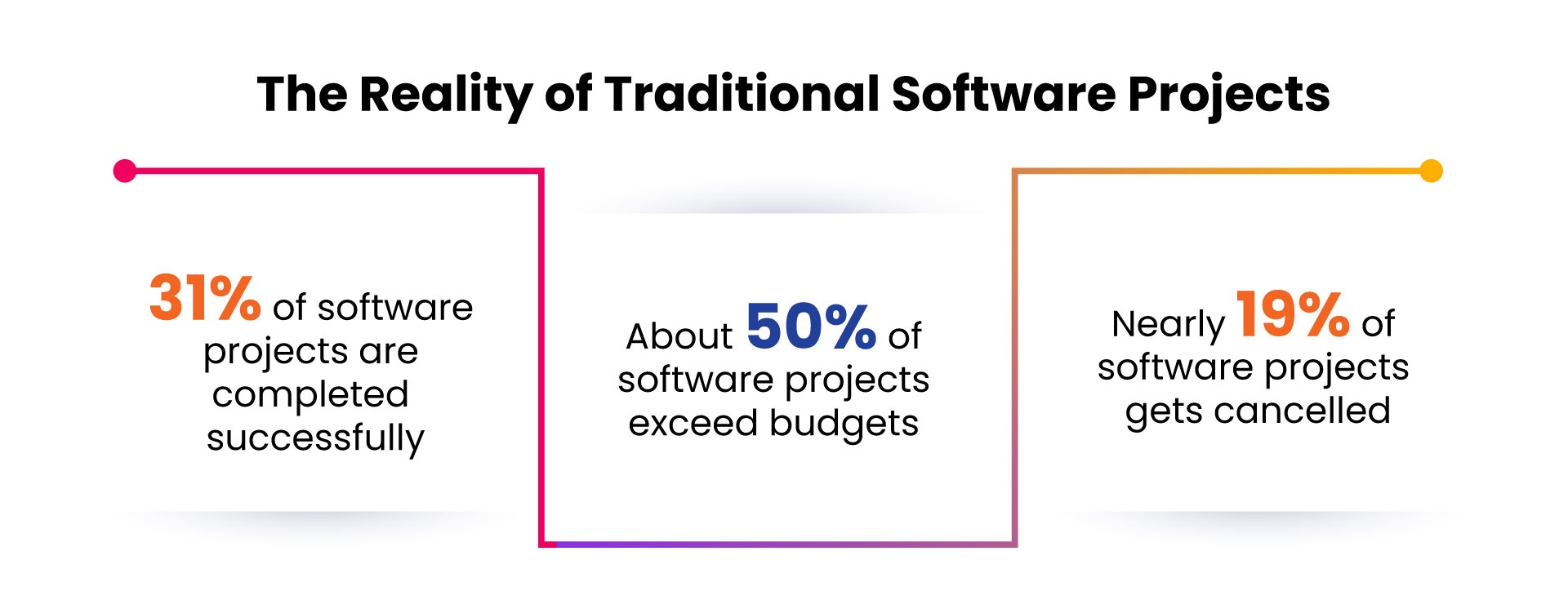 This creates a difficult balance for business leaders. You need systems that can scale as your business grows, but committing to all-at-once development introduces significant delivery and financial risks. So, by the time the system is ready, budgets may increase, and expectations may shift.
That’s why many companies are shifting toward a more practical strategy to develop scalable systems through phased delivery and value-driven roadmaps. Here, we’ll explain how we help businesses build a scalable system with predictable budgets.
Advantage of Phased Delivery and Value-Driven Roadmaps
Phased delivery and value-driven roadmaps provide several useful advantages for companies looking to scale systems. This method allows teams to proceed with more defined priorities and improved decision-making.
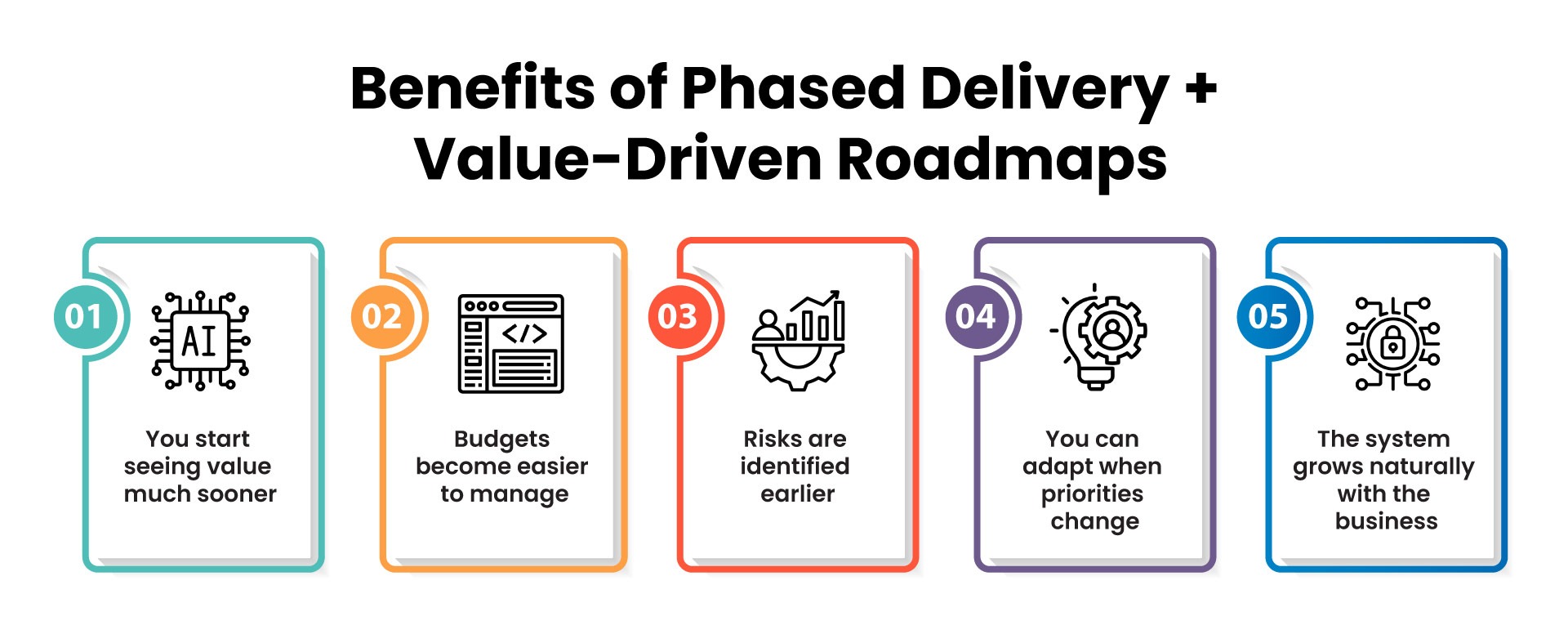
#1 You start seeing value much sooner
Phased development allows teams to release the most important features first instead of waiting for months or years for the system to be completed. It means the company can begin to see results sooner, whether it’s improving operations, providing better customer service, or launching a new digital capability.
#2 Budgets become easier to manage
When systems are delivered in stages, investments are made gradually rather than all at once. As each phase is completed, the team gains understanding about scope, effort, and priorities. It increases the predictability of future budgeting and reduces the risk of unexpected expenses.
#3 Risks are identified earlier
Large, one-time projects often run into difficulties because many decisions are based on assumptions made at the beginning. With phased delivery, teams can test concepts and validate these decisions along the way. So, if something isn’t working as decided, it can still be fixed before it hampers the budget.
#4 You can adapt when priorities change
Business priorities rarely remain the same for very long. After each phase, a value-driven roadmap allows businesses to reassess what matters most and focus on the next project that will deliver the most impact.
#5 The system grows naturally with the business
Each stage builds on the previous one because the system evolves gradually. As the company expands, this creates the foundation over time and makes it simpler to add new features without needing to completely rebuild the system.
How We Build Scalable Systems with Predictable Budgets
Now, let’s examine closely how scalable systems are designed while maintaining predictable budgets. The focus is to deliver value in phases and grow the system as priorities change instead of just developing everything at once. The following are the key practices that help us in directing this approach:
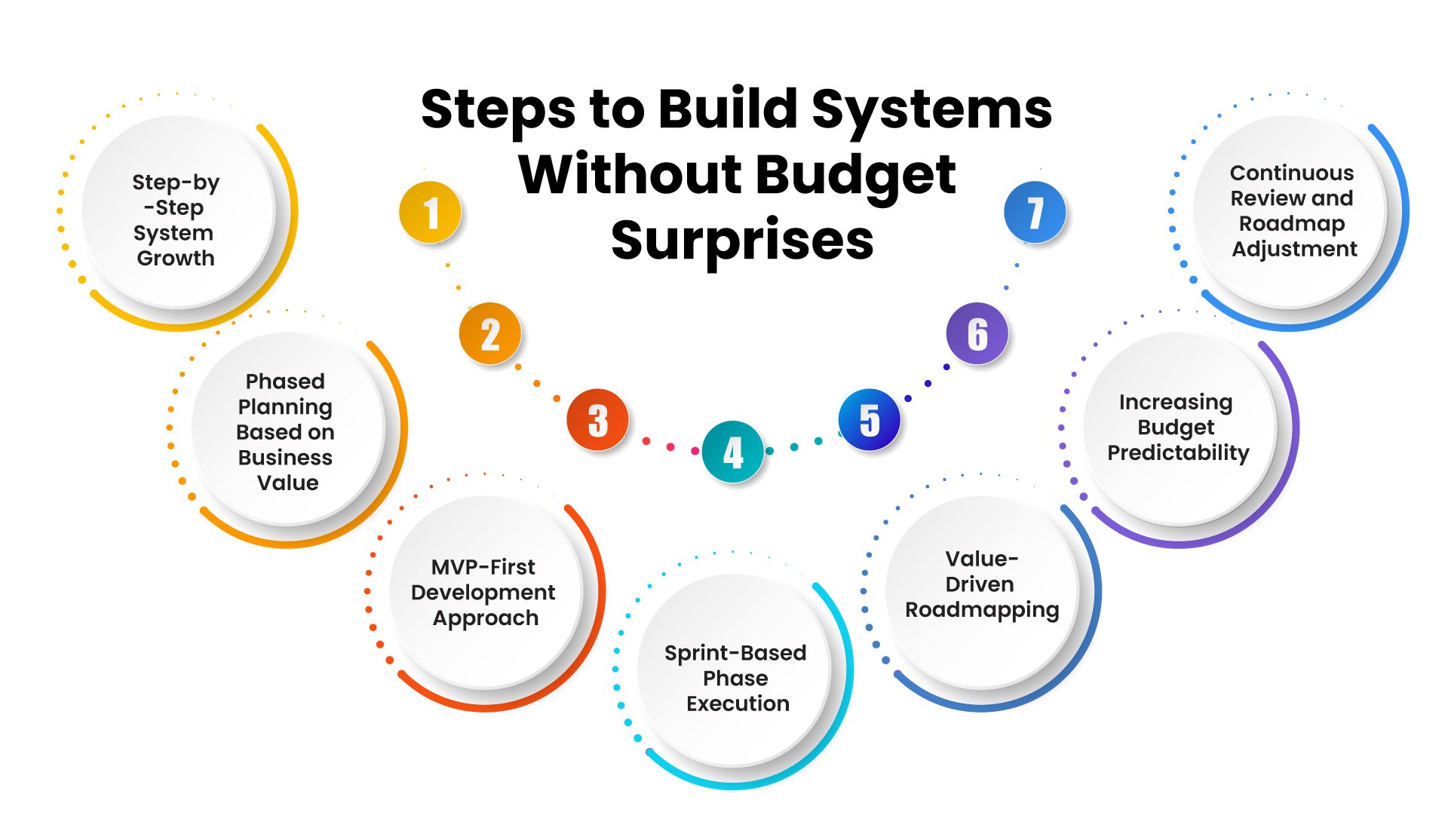
1. Step-by-Step System Growth
Building everything up front before deploying the systems? That’s when projects become complicated before they become valuable.
A more practical strategy is to allow the systems to grow gradually. Instead of delivering a large platform all at once, the system develops in smaller and more manageable stages. It facilitates validating decisions early and avoiding budget surprises later.
How does it help?
-
Teams deliver critical capabilities first, then expand the platform gradually.
-
Each stage adds functionality while strengthening scalability.
-
Stakeholders see early progress and measurable results.
Many large tech companies use this incremental scaling model. This approach reduces risk because the system is developed based on actual usage instead of assumptions made at the beginning of the project.
2. Phased Planning Based on Business Value
Standish Group CHAOS Report states that projects with incremental delivery methods have a high success rate of 3 times greater than compared to big-bang delivery models. This method is more successful than traditional large-scale builds.
Not every feature has the same level of impact. That’s why scalable systems are best to plan scalable systems in phases with priorities determined based on business value rather than feature volume. Teams focus on what will create the most immediate impact instead of building everything in the roadmap upfront.
How does it help?
-
Features are prioritized based on business impact and customer needs.
-
Each phase delivers capabilities that create measurable value.
-
Stakeholders can review results and make better investment decisions after every phase.
3. MVP-First Development Approach
Trying to perfect the entire system before releasing anything? That’s where you’re going wrong.
The MVP-first approach strategy changes this notion. Instead of waiting for the entire system, companies launch with a Minimum Viable Product (MVP) that delivers the most crucial functions. The objective is to build value sooner and learn faster.
How does it help?
-
The MVP solves the core user problem first.
-
Real usage helps validate assumptions early.
-
Future phases are shaped by actual user feedback.
4. Sprint-Based Phase Execution
As stated above, instead of building everything at once, build in phases.
Think of it as building momentum through small, predictable steps instead of just waiting months for a major release. Most scalable systems are delivered in short, focused sprints. It allows teams to adjust based on feedback and make progress visible.
How does it help?
-
Work is divided into short development cycles (2-3 weeks).
-
Stakeholders can review progress regularly and give feedback.
-
Risks and issues are identified early instead of late.
5. Value-Driven Roadmapping
Many software roadmaps fail because they place more emphasis on features than outcomes.
However, this way of working can be reversed with a value-driven roadmap. Instead of asking "What should we build next?", the focus becomes "What will create the most business impact next?" This shift helps businesses invest in skills that actually benefit the company.
How does it help?
-
Prioritize business value over features
-
Focus on revenue, adoption, and efficiency
-
Align tech investment with business strategy
6. Increasing Budget Predictability
One of the main concerns for CIOs and CTOs is budget uncertainty. When an entire system is planned in advance, estimates are often done on assumptions. As development progresses, these assumptions shift, leading to unexpected costs.
However, with phased delivery, businesses improve budget predictability because planning gets increasingly more accurate over time.
How does it help?
-
Initial investment focuses on the core MVP and system foundation.
-
Each phase improves clarity on scope and effort.
-
Future phases are estimated using real delivery data.
For example, at Clarion, we follow this approach to estimate evolving software projects. With our budget predictability approach, we break down delivery into phases to bring more clarity around scope, design, and practical restrictions before you make any larger investments.
7. Continuous Review and Roadmap Adjustment
Planned the entire development roadmap, but still facing misaligned sync in effort and priorities?
This approach only works with continuous review. Instead of locking down the roadmap early, teams evaluate results after each phase and adjust the next phases based on what actually works.
How does it help?
-
Teams review delivered features and adoption.
-
Adjust priorities based on value and feedback.
- Estimate future phases more accurately.
Let Clarion Guide You In Building Scalable Systems
By now, you are aware of how phased delivery and value-driven roadmaps help businesses create scalable systems while maintaining cost and risk under control. The real issue is in implementing this strategy with the right knowledge, planning, and delivery discipline. That’s where the right technology partner can help in this situation.
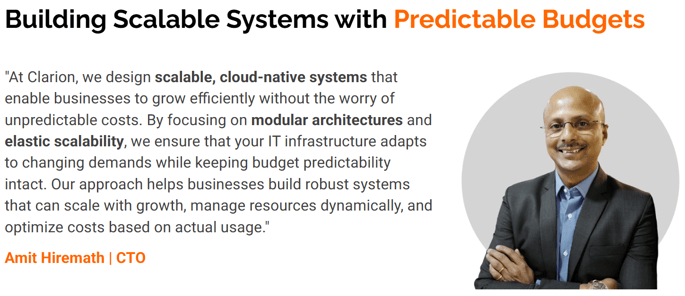
At Clarion, we deliver scalable software solutions in sync with the evolving company needs. Our software development company assists businesses in developing and executing system roadmaps that handle business value, long-term scalability, and predictable investment. Here’s what we’ve achieved so far:
-
1,500+ global clients
-
98% satisfaction rate
-
Business-aligned phased delivery
-
Value-driven scalable roadmaps
-
Senior architects & engineering leaders
Our strategy is based on proof over promise. We don’t just commit, but demonstrate how we deliver value at every stage of your project. Our agile product-oriented deliveries (PODs) work like an extension of your own team, with our flexible vEmployee model that lets you scale up or down as needed. With experienced lead engineers guiding the process, you see real progress, not endless discovery cycles.
If you’re considering a phased approach to establishing scalable systems, speak with our software development service experts to understand how Clarion assists companies in delivering value and maintaining predictable investment.
Author

Devki Nair - Service Delivery Manager
Devki Nair, a seasoned professional with over 17 years of experience in the IT industry, boasts a multifaceted skill set encompassing 3 years in Service Delivery Management, 8+ years in Project Management, and 6+ years in programming. In her current role, Devki excels in managing multiple accounts across geographies, leading project managers, and overseeing diverse teams of over 50 people. As a dynamic leader, she actively participates in various organizational-level leadership initiatives, contributing to the strategic success of her team and the broader company.


-1.png?width=375&height=240&name=MicrosoftTeams-image%20(9)-1.png)