

Overview
AI in web development often sounds like a future concept: automated coding, smarter tools, and highly personalized websites. However, the shift to AI-driven development is already happening. As digital platforms grow more complex and user expectations rise, traditional development methods are struggling to meet the need for speed, scalability, and ongoing optimization.
The data shows this change. GitHub’s 2023 developer survey states that 92% of developers are already using AI coding tools in their workflow, showing how quickly AI is becoming part of modern development processes.
As a result of this change, many businesses are implementing AI-assisted development techniques to combine human expertise with intelligent automation. This strategy helps companies improve development, website performance, and build digital platforms. In this blog ahead, we’ll explore how AI is transforming web app development and what the future may look like.
How AI is Transforming Web Development?
AI is no longer just an experiment in web development but a part of everyday workflows. AI helps teams create and launch digital platforms quickly. Instead of replacing developers, it works like a smart assistant, handling repetitive tasks and letting developers focus on bigger issues.
Let’s examine some of the key ways AI is changing web app development services in the USA today.
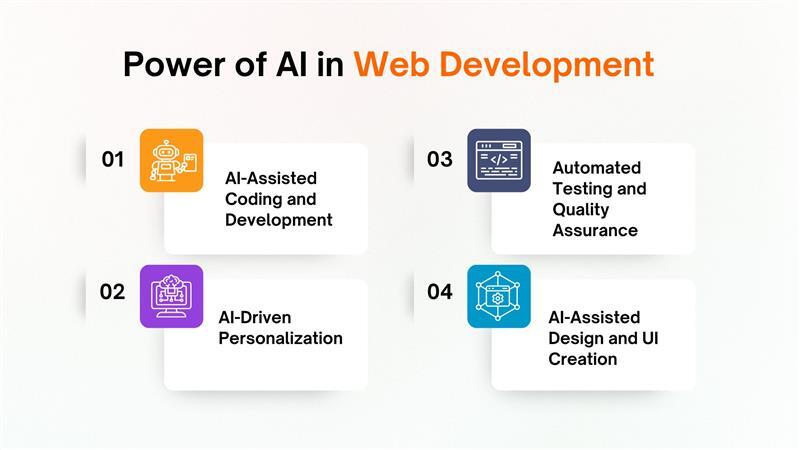
1. AI-Assisted Coding and Development
According to GitHub research, developers who use Copilot complete coding tasks up to 55.8% faster, which speeds up the release of new features and products.
AI is simplifying the coding process for developers. Tools like GitHub Copilot and Amazon CodeWhisperer can suggest entire lines or blocks of code while developers are typing, based on patterns discovered from billions of lines of existing code.
Think of it like a developer is creating a login system, the AI tool can quickly suggest things like error handling, authentication logic, or security checks. The developer still reviews and refines the code, but they don’t have to start from scratch.
2. AI-Driven Personalization
AI enables websites to deliver personalized experiences by analyzing user behavior and dynamic content adaptation. For example, eCommerce platforms use AI to recommend products based on history, past purchases, and preferences.
According to McKinsey research, businesses that use advanced personalization techniques make 40% more money from such operations compared to slower-growing competitors. It implies that AI is becoming essential to web development for building digital platforms that can adjust to specific users.
3. Automated Testing and Quality Assurance
Testing is one of the most time-consuming aspects of web development. AI is assisting teams to automate this process by bug detection, failure prediction, and test case prioritization. These tools can analyze application behavior, find irregularities, and suggest solutions.
According to Capgemini’s World Quality Report, businesses that implement AI in testing can reduce testing efforts by up to 30% while improving software quality. It translates into faster releases and fewer production problems.
4. AI-Assisted Design and UI Creation
AI is starting to have an impact on the design side of web development. Modern design tools are introducing AI features that can create layouts, suggest UI elements, and even transform design ideas into functional prototypes.
For example, AI tools can now generate layout recommendations based on design best practices when designers add prompts like “Create a landing page for a fintech startup.”
It significantly reduces the time required to move from concept to functional interface. AI is assisting in streamlining the design-to-development process, while human creativity still plays a crucial role.
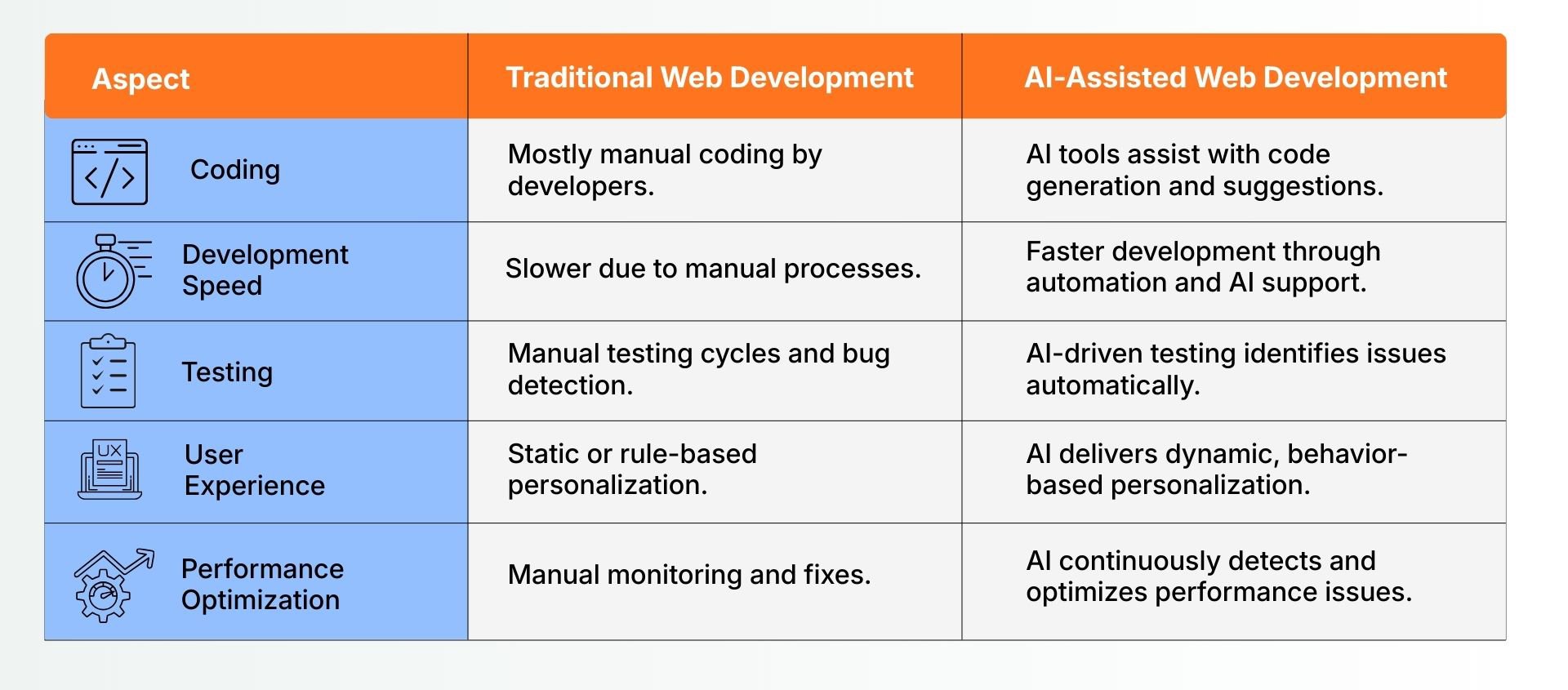
Traditional vs AI-assisted Web Development
Before choosing an AI in a web app development company, it’s important to compare how websites and digital platforms were built traditionally versus how AI-assisted development is changing the process today. Here’s the comparison between these two to understand the difference:
Key Trends Shaping the Future of AI in Web Development
The future of web app development services in the USA is influenced by AI. These innovations are not just improving but redefining the development process. Let’s understand what these key trends are and how these trends are transforming the future of AI in web development.
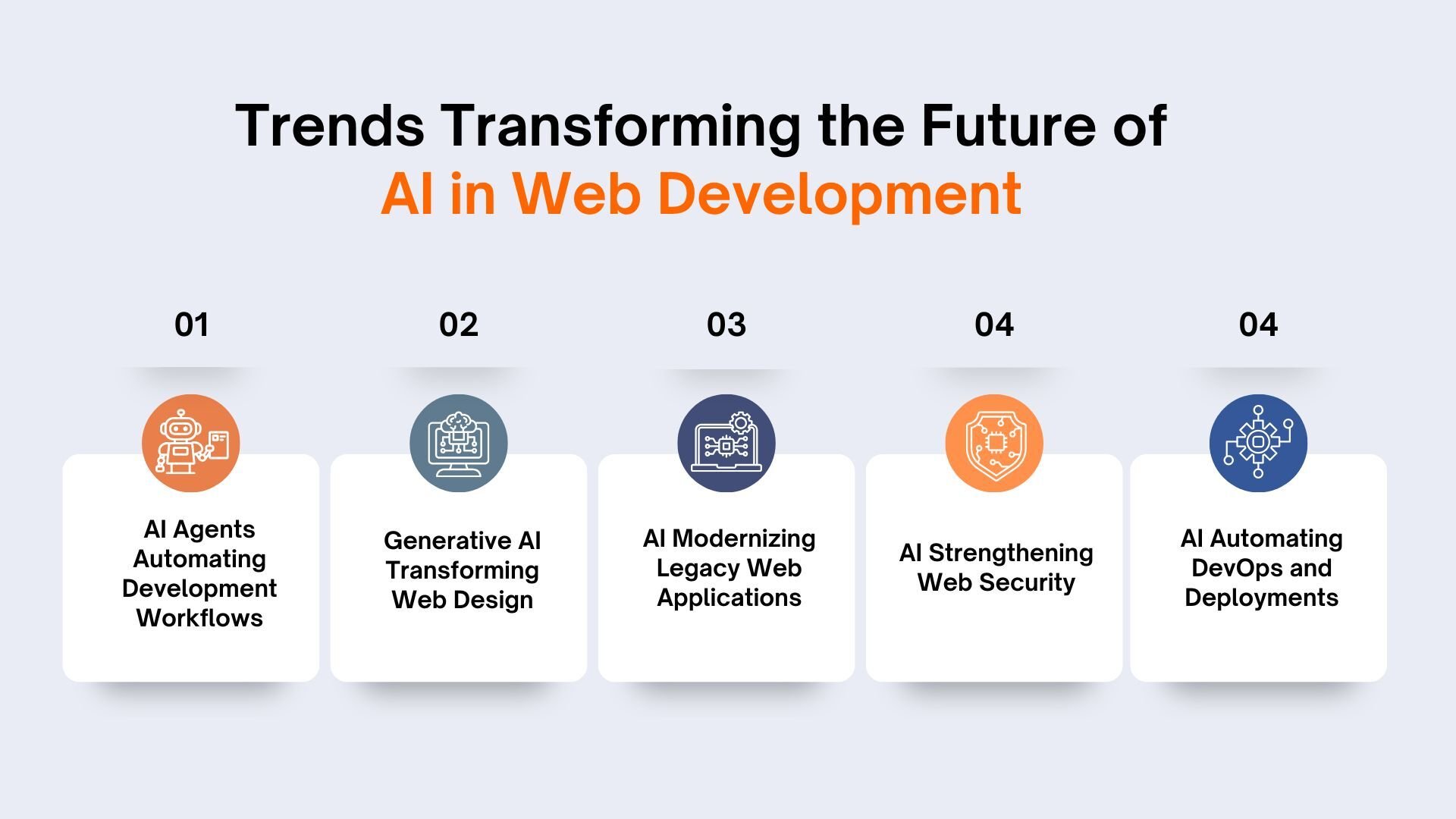
1. AI Agents Automating Development Workflows
As per Gartner, 75% of enterprise software engineers are expected to use AI coding assistants by 2028. It shows how rapidly AI-assisted development is becoming the norm.
One of the biggest changes in web app development companies will be the rise of AI agents capable of finishing the entire development workflows. Instead of assisting with single tasks, these systems can:
-
analyze feature requests
-
generate implementation plans
-
write and update code across multiple files
-
create documentation
For example, GitHub Copilot Workspace helps developers to describe a task in natural language, and the system will automatically create a plan and update different parts of the codebase.
2. Generative AI Transforming Web Design
Generative AI is expected to change how websites are developed and designed. Tools such as Wix ADI, Framer AI, and Webflow AI already allow users to create website layouts and components with simple prompts. AI can generate design structures based on user needs and best practices instead of manually designing every element.
McKinsey estimates that Gen AI could grow the world economy by $2.6 trillion to $4.4 trillion annually, with software engineering and product design being the biggest areas of productivity.
This shift will reduce the time needed to move from concept to working digital products.
3. AI Modernizing Legacy Web Applications
Many organizations rely on legacy web systems based on outdated frameworks. It takes a lot of resources to maintain and modernize these systems. AI tools are starting to assist with this challenge by evaluating massive codebases and suggesting improvements.
Platforms like GitHub Copilot and Sourcegraph Cody can identify inefficient code structures, suggest refactoring techniques, and even update dependencies. This matters since legacy systems consume a large amount of IT budgets.
According to McKinsey, about 70% of the average company’s IT budgets is spend on maintaining legacy systems instead of building new capabilities.
Ultimately, AI-powered modernization tools will help companies upgrade large web platforms faster at a lower cost.
4. AI Strengthening Web Security
Cybersecurity threats targeting web applications continue to grow in scale and complexity. However, AI-powered security tools can analyze traffic patterns, possible attacks, and identify anomalies.
According to IBM’s Cost of a Data Breach Report, the global average cost of a data breach reached $4.45 million.
The importance of such protection is clear. The future of AI systems will play an important role in identifying weaknesses and protecting digital platforms before attacks occur.
5. AI Automating DevOps and Deployments
Another major shift is expected in DevOps and infrastructure management. AI-powered systems will track performance, anticipate malfunctions, and streamline deployment processes.
According to Gartner, 80% of DevOps teams will utilize AI-driven technologies to automate deployments and maximize performance.
In the future, AI will help development teams manage digital platforms with minimal manual involvement.
How Businesses Prepare for AI-Driven Web Development?
AI adoption in any web development agency is a gradual process. Most successful organizations approach it step by step, gradually incorporating AI into their development workflows. If you’re considering AI for your web platforms, here are some practical ways businesses can prepare for this shift:
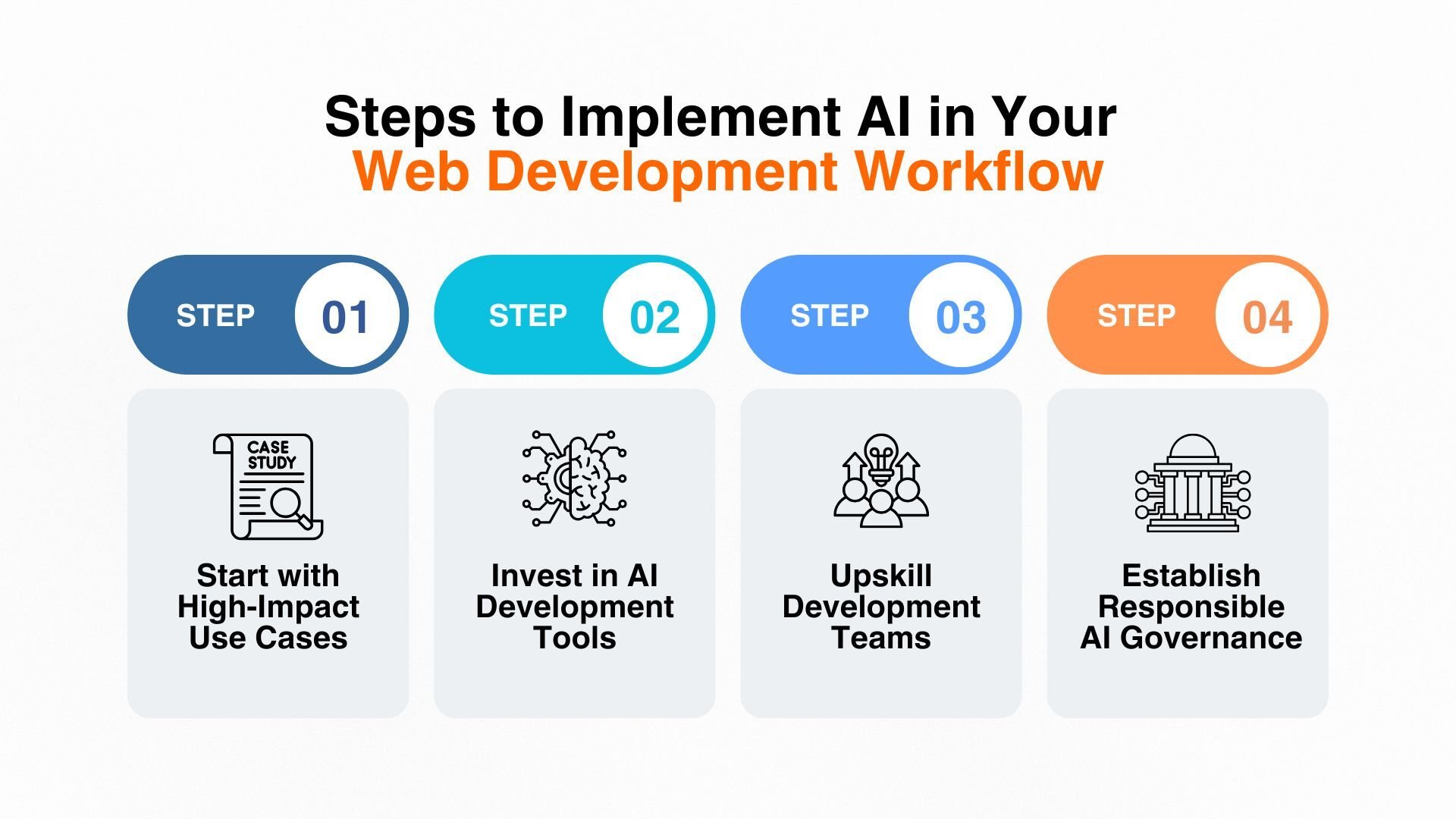
1. Start with High-Impact Use Cases
Instead of trying to change everything at once, businesses usually begin with areas where AI can make an immediate impact. Many companies initially use AI for repetitive and time-consuming activities for developers, such as coding assistance, testing automation, and performance optimization.
For example, GitHub Copilot is an AI coding assistant that suggests code as developers write it. As per research, developers using Copilot were able to complete tasks up to 55% faster, freeing up time to focus on design and problem-solving rather than repetitive coding.
2. Invest in AI Development Tools
Many companies are preparing for AI development by incorporating Artificial intelligence (AI) applications into their current tech stack. These tools can help with:
-
code generation and debugging
-
automated testing
-
user experience optimization
-
website performance monitoring
3. Upskill Development Teams
As per the Stack Overflow developer study, over 70% of developers are using or planning to use AI in their workflows.
AI changes how development teams operate, and many businesses are spending money on upskilling and training. Instead of writing every line of code manually, developers increasingly act as AI collaborators by reviewing AI-generated code, guiding intelligent systems, and refining outputs.
4. Establish Responsible AI Governance
As AI becomes more integrated in digital platforms, businesses must also think about privacy, ethics, and risk management. These AI systems may introduce difficulties such as:
-
data privacy concerns
-
algorithm bias
-
over-automation without human oversight
Many businesses are developing AI governance frameworks to ensure the ethical use of AI technologies. For example, companies are adhering to standards like the OECD AI Principles to promote accountability, transparency, and fairness in AI systems.
Want to Grow with AI in Web Development? Consult Clarion!
AI is changing the development, optimization, and scaling of modern websites. However, implementing AI effectively requires the right approach, tools, and technical expertise. That’s when the right technology partner can make a real difference.
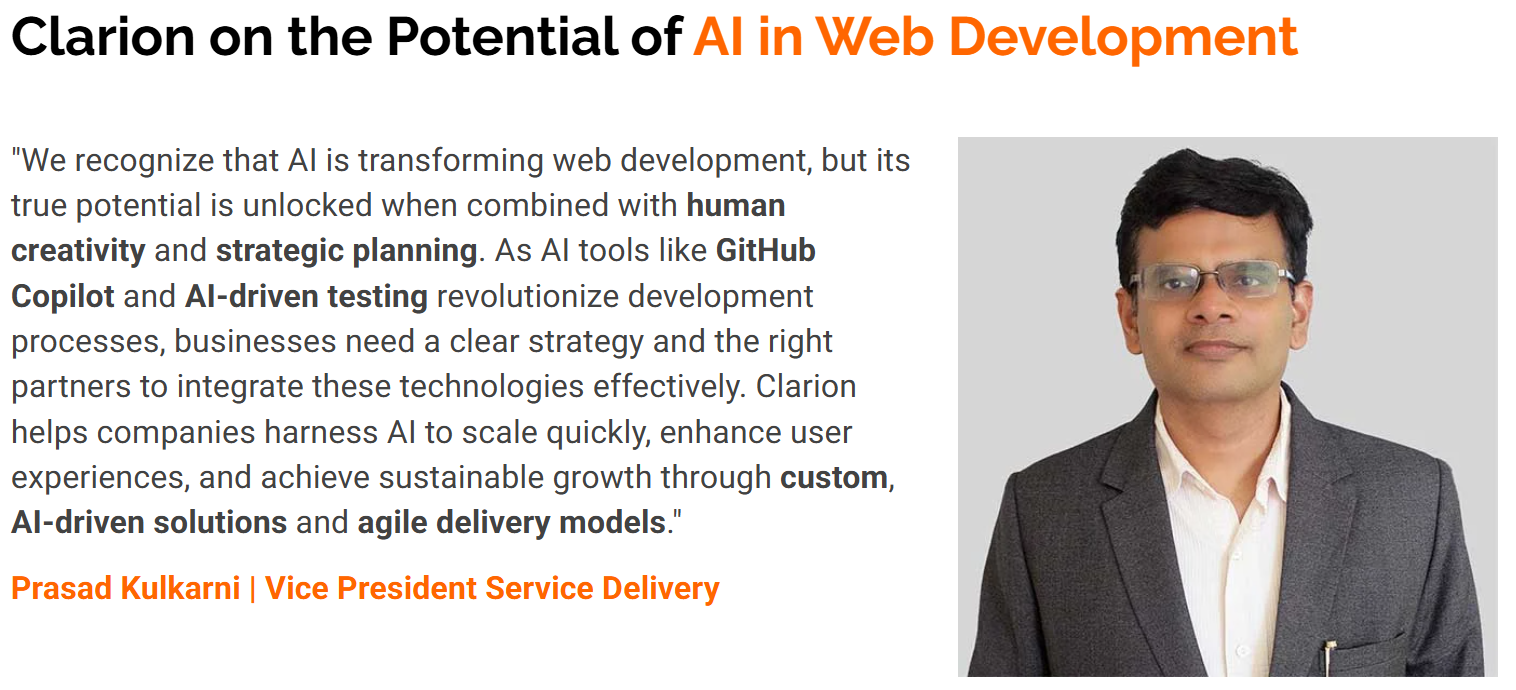
With Clarion, your business can integrate AI into web development processes while focusing on performance, scalability, and long-term value. Our teams collaborate directly with businesses to design intelligent digital platforms and apply AI-driven development practices that support actual business outcomes.
Our strategy is based on proof over promise. We don’t just commit, but demonstrate how we deliver value at every stage of your project. Our agile product-oriented deliveries (PODs) work like an extension of your own team, with our flexible vEmployee model that lets you scale up or down as needed. With experienced lead engineers guiding the process, you see real progress, not endless discovery cycles.
If you’re exploring how AI can enhance web development efficiency, accelerate innovation, and improve user experiences, contact Clarion’s web development agency to learn how we help companies in implementing AI-driven development strategies.
Author

Prasad Kulkarni - Vice President Service Delivery
Prasad Kulkarni is the Vice President of Service Delivery at Clarion Technologies, renowned for his expertise in QA, JavaScript, MySQL, jQuery, Ajax, and E-commerce. His proficiency in Web Application and Development, coupled with a strong background in Business Intelligence (BI) and Business Development (BD), has propelled him to the forefront of technological innovation. Prasad's dynamic approach and deep technical knowledge make him a pivotal leader in the tech industry.