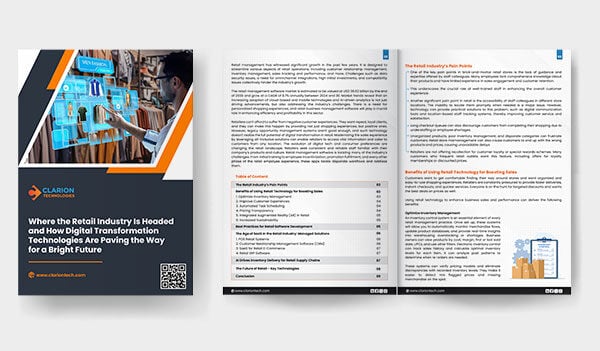
The retail industry is undergoing a seismic shift as digital transformation technologies redefine every aspect of how businesses operate, connect with customers, and deliver value. As consumers increasingly demand personalized, seamless experiences, retailers must embrace these technologies to stay competitive and relevant in a rapidly evolving market.
One of the most significant changes in the retail landscape is the rise of omnichannel shopping experiences. Customers no longer differentiate between online and offline channels; they expect a unified, integrated experience across all touchpoints. Technologies like Artificial Intelligence (AI), Machine Learning (ML), and Big Data analytics enable retailers to offer personalized recommendations, streamline operations, and predict customer behavior with remarkable accuracy. AI-driven chatbots and virtual assistants provide 24/7 customer support, enhancing the overall shopping experience.
E-commerce platforms are also evolving, leveraging Augmented Reality (AR) and Virtual Reality (VR) to create immersive shopping experiences. Customers can now virtually try on clothes, visualize furniture in their homes, or even experience a store in a virtual environment before making a purchase. This not only enhances customer engagement but also reduces return rates, leading to higher customer satisfaction and cost savings for retailers.
Digital transformation is also revolutionizing supply chain management. Technologies like the Internet of Things (IoT) and blockchain are being used to create transparent, efficient, and resilient supply chains. IoT sensors track products in real-time, ensuring timely delivery and reducing the chances of lost or damaged goods. Blockchain technology ensures the authenticity and traceability of products, which is increasingly important for consumers who prioritize ethical and sustainable shopping.
Furthermore, the adoption of cloud computing and data analytics is empowering retailers to harness the power of data. By analyzing vast amounts of customer data, retailers can gain valuable insights into trends, preferences, and buying patterns, allowing for more informed decision-making. This data-driven approach is essential for optimizing inventory management, pricing strategies, and marketing campaigns.
In conclusion, the future of the retail industry lies in its ability to adapt to and leverage digital transformation technologies. By embracing these innovations, retailers can not only meet but exceed customer expectations, driving growth and ensuring long-term success in a highly competitive market. The integration of AI, AR, IoT, blockchain, and data analytics is paving the way for a brighter, more customer-centric future in retail.

25+ Years of Excellence Helping Businesses Succeed with Advanced Technology Solutions.
Resources
Media & Events
Customer Stories
IT Outsourcing ROI Calculator
Thought Leadership to Decode Innovation & Accelerate Smart Business Decisions.